
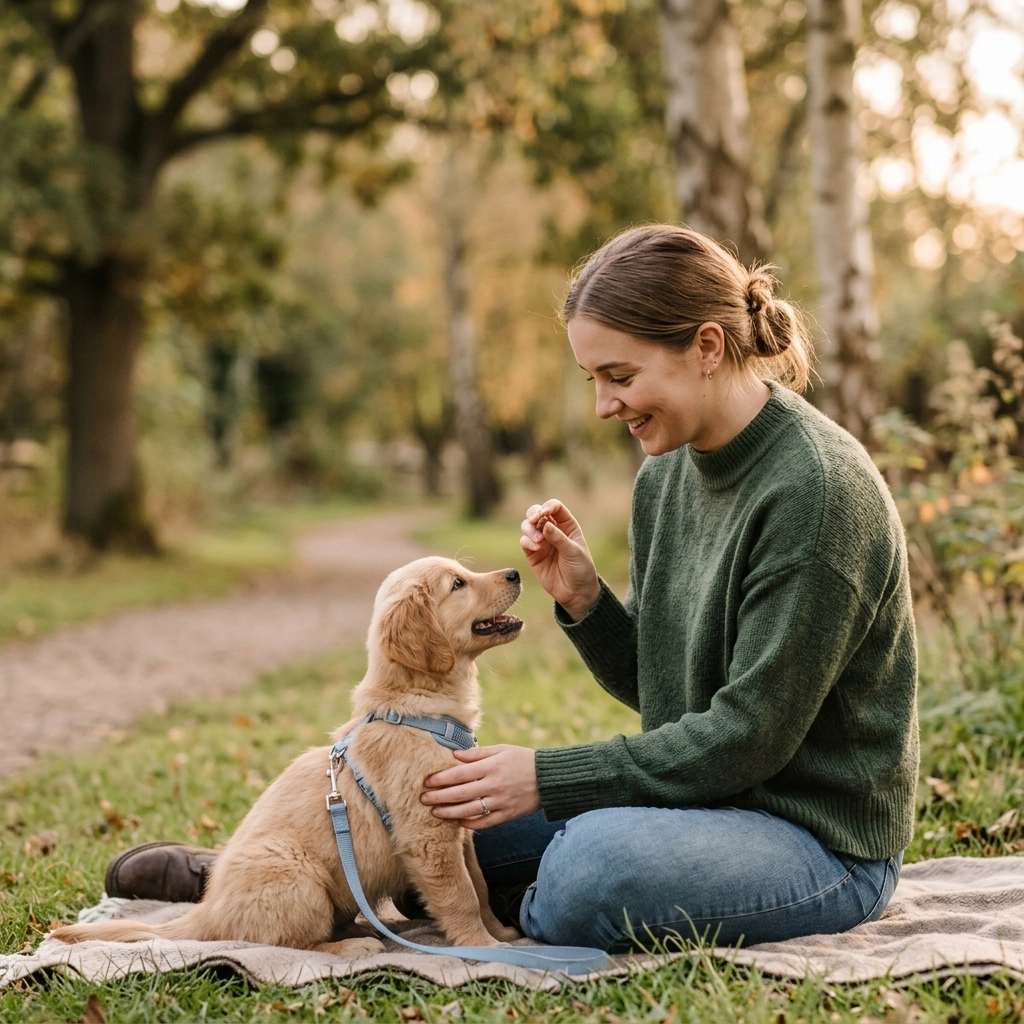
Bringing a new puppy home to Rugeley is one of the most exciting experiences a household can have. Whether you’re planning weekend walks across Cannock Chase or quiet strolls along the Trent and Mersey Canal, you want a companion that is well-behaved, confident, and responsive. However, the path to a perfectly trained dog is often littered with common pitfalls that can lead to frustration for both you and your new pet.
At The Pet Leisure Co, we see many well-meaning owners accidentally instilling habits that become difficult to break later in life. Training a puppy requires a blend of patience, consistency, and a balanced approach to communication. If you find yourself struggling, you are certainly not alone.
Below, we have outlined the seven most common mistakes owners make with puppy training in Rugeley, along with professional advice on how to rectify them today.
1. Delaying the Start of Formal Training
Many owners believe that a puppy needs several weeks to "settle in" before any real training begins. There is a common misconception that puppies under 16 weeks old are "too young" to learn complex behaviours. Consequently, owners often wait until bad habits have already formed before seeking a dog behaviourist.
Why it’s a problem:
Puppies are learning from the very second they enter your home. If they aren't being taught what to do, they will invent their own fun: which usually involves chewing skirting boards or toileting on the rug. Furthermore, the critical socialisation window for puppies closes remarkably early, usually around 14 to 16 weeks.
The Fix:
You should start basic puppy training on day one. This doesn't mean hour-long drills; rather, it involves teaching them their name, where to go to the toilet, and how to sit for their food. Establishing these boundaries early sets the tone for your relationship. Moreover, getting them used to the sights and sounds of Rugeley town centre or the local parks early on will pay dividends as they grow.
2. Inconsistency Between Family Members
Consistency is the cornerstone of any successful training programme. A frequent mistake we see in households across Staffordshire is different family members using different commands or having different sets of rules. For example, one person might let the puppy on the sofa, while another tells them "off."
Why it’s a problem:
Dogs do not speak English; they learn to associate specific sounds with specific actions. If one person says "Down" to mean "don't jump," and another says "Down" to mean "lie on the floor," the puppy becomes confused and anxious. Therefore, the puppy isn't being "naughty" or "stubborn": they simply don't understand what is being asked of them.
The Fix:
Hold a family meeting and agree on a set list of "cue words." Write them down and stick them on the fridge. Ensure everyone knows that if the rule is "no scraps from the table," it must be followed 100% of the time. Consistency provides your puppy with a sense of security, as they know exactly what to expect from their environment.

3. Training Sessions That Are Too Long
It is easy to get over-ambitious when you see your puppy successfully perform a "sit" for the first time. Many owners then try to repeat the action for 20 or 30 minutes, hoping to "cement" the learning.
Why it’s a problem:
Puppies have incredibly short attention spans: much like human toddlers. When a session goes on for too long, the puppy becomes physically and mentally fatigued. This lead to "zoomies," nipping, or simply walking away. If a session ends on a note of frustration, the puppy learns that training is a chore rather than a rewarding game.
The Fix:
Keep your sessions short, sharp, and successful. Aim for two to three minutes, several times a day. You can easily fit these in while the kettle boils or during an ad break on TV. By keeping sessions brief, you ensure that your puppy stays engaged and always finishes on a winning note. For more ideas on how to integrate this into your daily routine, check out our guide on training on the go in Rugeley.
4. Relying Solely on One Training Style
In the modern dog training world, there is often a push towards "positive-only" methods. While rewarding good behaviour is essential, a balanced training approach is often more effective for creating a reliable companion in the real world.
Why it’s a problem:
If a puppy only listens when you have a piece of chicken in your hand, you don't have a trained dog; you have a dog that is "negotiating" with you. In high-distraction environments like Cannock Chase, a treat may not be enough to stop a puppy from chasing a squirrel or running toward a busy road.
The Fix:
At The Pet Leisure Co, we advocate for a balanced perspective. This means we use plenty of rewards (food, toys, praise) to teach new skills, but we also implement clear boundaries and fair corrections to ensure the dog understands what is unacceptable. Professional dog training in Walsall or Rugeley should focus on clear communication. This balance ensures your dog listens because they respect your leadership, not just because they want a snack.

5. Accidentally Ruining the "Recall" Command
Recall is perhaps the most important skill your dog will ever learn. Unfortunately, it is also the command most frequently ruined by owners. A common mistake is calling a puppy to "come" only when it is time to leave the park or when they are about to have a bath.
Why it’s a problem:
The puppy quickly learns that "Come" means the fun is over. Furthermore, if you only call your puppy when they are doing something wrong, they begin to associate the command with a negative outcome. Consequently, when you really need them to return: perhaps near the A51 or in a field with livestock: they are likely to ignore you.
The Fix:
Protect your recall cue like it is gold. Only use it when you can guarantee a positive outcome. Practice "check-in" recalls: call them, give them a high-value reward, and then immediately tell them to "go play" again. This teaches them that coming to you is a rewarding interruption, not the end of their freedom. Given the new 2026 livestock laws, having a bulletproof recall in rural areas like Uttoxeter and Rugeley is now more critical than ever.
6. Chaotic or Overwhelming Socialisation
Many owners believe that socialisation means letting their puppy meet every person and every dog they see. They take their young pup to busy markets or "free-for-all" dog parks, hoping they will "get used to it."
Why it’s a problem:
This often leads to "flooding," where a puppy becomes so overwhelmed that they shut down or become fearful. Conversely, it can create a "frustrated greeter": a dog that barks and lunges on the lead because they aren't allowed to play with every dog they see. Moreover, bad experiences with unruly dogs in public spaces can lead to lifelong reactivity.
The Fix:
Socialisation should be about quality over quantity. It is about teaching your puppy to be neutral and calm in the presence of distractions. Instead of a busy dog park, try sitting on a bench near Etching Hill and rewarding your puppy for simply watching the world go by. If you're unsure whether your pup needs a group setting or more focused attention, read our comparison on 1-1 training vs group classes.

7. Repeating Commands (Cue Nagging)
"Sit. Sit… Sit! I said SIT!" We have all heard it, and most of us have done it. Repeating a command multiple times is one of the quickest ways to teach your puppy that they don't have to listen the first time.
Why it’s a problem:
When you repeat a command, the puppy learns that "Sit-Sit-Sit" is the actual cue, or they simply wait for your voice to get louder and angrier before they bother to move. This undermines your authority and makes your training messy. Therefore, the puppy learns that your words are just "background noise" rather than instructions.
The Fix:
Say it once. If the puppy doesn't respond, wait a few seconds. If they still don't respond, it usually means they are either too distracted or they don't actually know the command as well as you thought. Go back a step, reduce the distractions, and help them succeed with a lure or a gentle physical prompt. Reward the first time they get it right.
Local Expertise in Rugeley
Rugeley is a fantastic place to raise a dog, but its unique mix of town life and rugged countryside requires a dog that is versatile and well-trained. From the deer on the Chase to the busy traffic on the bypass, your puppy needs to be prepared for everything.
If you are struggling with any of these issues, The Pet Leisure Co offers tailored puppy training packages designed to tackle these common mistakes head-on. Our mobile services cover Rugeley, Lichfield, Cannock, and Stafford, ensuring you get expert help in the environment where you need it most.
Summary of Key Takeaways
- Start Early: Don't wait for problems to arise; begin training on day one.
- Be Consistent: Ensure the whole family uses the same words and rules.
- Keep it Short: Mini-sessions are much more effective than long marathons.
- Stay Balanced: Use rewards to teach, but set clear boundaries for reliability.
- Value Recall: Never use your recall command for something the dog dislikes.
- Focus Socialisation: Aim for calm neutrality rather than constant interaction.
- Say it Once: Avoid repeating commands to keep your communication clear.
Training a puppy is a journey, not a race. By avoiding these seven common mistakes, you are well on your way to having a dog that is a pleasure to take anywhere in Staffordshire.
Contact Us
Ready to get your puppy off to the best possible start? Whether you need a dog behaviourist for specific issues or just want to join our local puppy classes, we are here to help.
- Visit our website: petleisure.co.uk
- Explore our services: Dog Training Packages
- Follow us for tips: Check out our latest reviews from happy owners in your area.

