
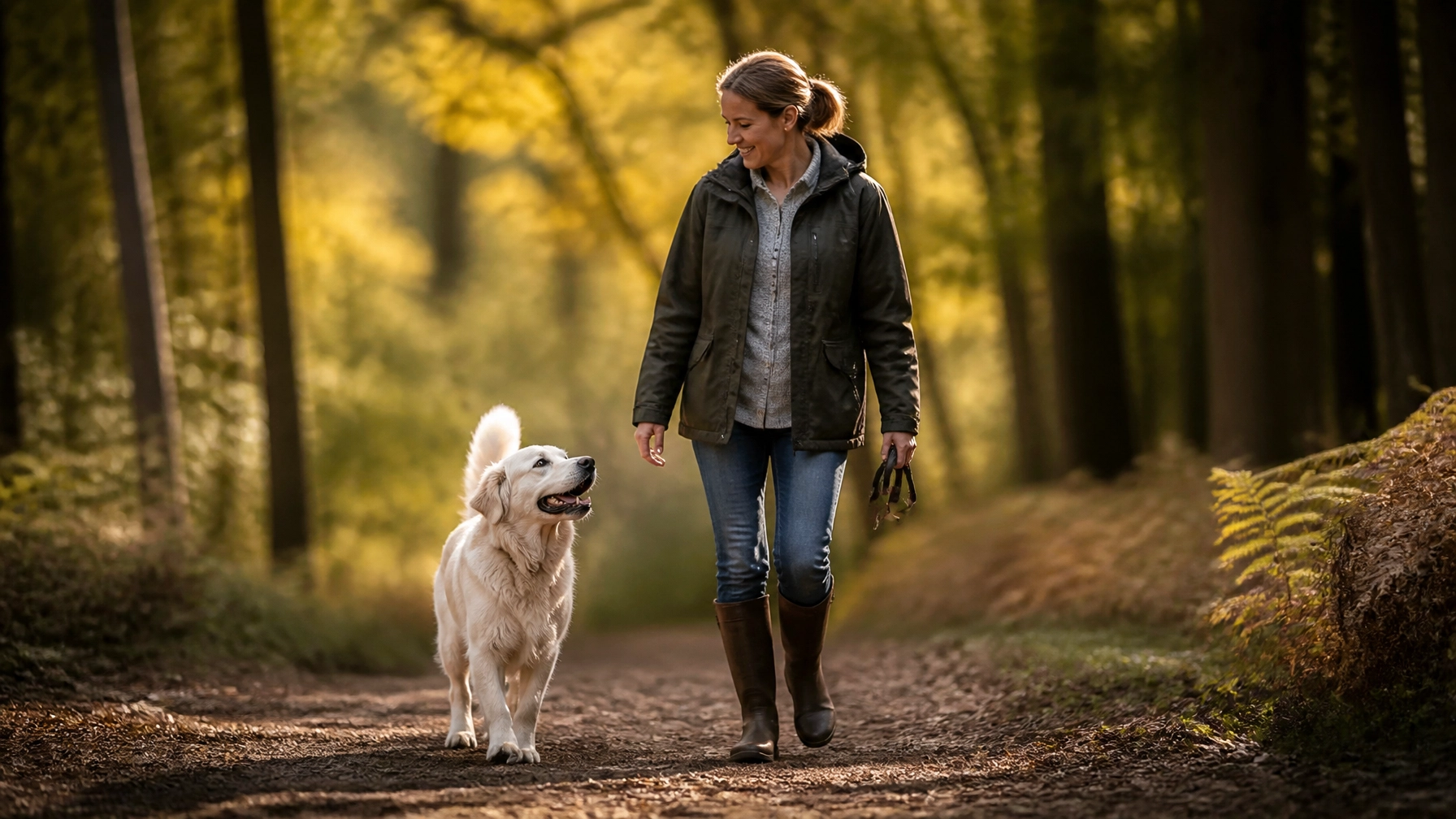
Living in a beautiful area like Cannock offers incredible opportunities for dog owners. Between the expansive trails of Cannock Chase and the quiet paths of Shoal Hill Common, we're spoilt for choice when it comes to walking spots. However, having a great location is only half the battle; ensuring your dog is well-behaved enough to enjoy these spaces is where the real work begins.
Many owners find themselves frustrated when their furry companion doesn't respond as expected. Whether it's pulling on the lead during a walk through Hednesford Hills or ignoring a recall command in the garden, these issues often stem from common training errors. At The Pet Leisure Co, we specialise in dog training cannock, providing 1-1 mobile dog training that addresses these specific hurdles in the comfort of your own environment.
In this guide, we will explore the seven most frequent mistakes local owners make and, more importantly, how you can fix them to build a stronger bond with your pet.
1. Expecting Too Much, Too Soon
One of the most frequent errors we see is the "sprint" mentality. Owners often expect a puppy or a newly rescued dog to master complex commands within a few days. Therefore, when the dog inevitably fails to perform, the owner becomes frustrated, which the dog quickly senses.
Dogs require time to mature and understand what is being asked of them. Training is a marathon, not a sprint. If you try to teach a perfect "stay" in the middle of a busy Cannock town centre before they can do it in your hallway, you are setting them up for failure.
The Fix: Break your training down into tiny, achievable steps. Start in a quiet room with zero distractions. Once your dog is successful there 90% of the time, move to the garden, then to the pavement outside, and finally to busier spots like Cannock Chase.
2. Inconsistency Across the Household

If you tell your dog "Off" when they jump up, but your partner says "Down" or, worse, gives them a cuddle, your dog will be understandably confused. Inconsistency is the fastest way to stall your progress with dog training cannock.
Dogs thrive on clear boundaries and predictable outcomes. When the rules change depending on who is in the room, the dog learns that your commands are optional rather than essential. Moreover, this confusion can lead to anxiety, as the dog never truly knows how to please you.
The Fix: Hold a family meeting. Decide on the exact words you will use for every command (e.g., "Sit," "Stay," "Wait," "Heel"). Write them down and stick them on the fridge. Consistency is the foundation of a reliable dog.
3. The "Nagging" Command Mistake
Do you find yourself saying "Sit, sit, SIT!" until your dog finally plonks their bottom down? This is known as "command nagging." By repeating the word, you are inadvertently teaching your dog that they don't have to listen the first time. They learn that the command is actually "Sit, sit, SIT" rather than just a single, clear "Sit."
Furthermore, repeating commands devalues your voice. In an emergency, such as your dog running toward a road near Lichfield Road, you need them to respond instantly to the first word you speak.
The Fix: Say the command once. If they don't respond, wait a few seconds. If they still don't respond, reset the situation by moving them slightly and try again, or go back a step in training. Never repeat the word until it becomes background noise.
4. Using the Wrong Reward Value

Many owners try to use standard kibble to train their dogs in high-distraction environments. While your dog might sit for a piece of dry biscuit in your kitchen, that same biscuit is unlikely to compete with the smell of a squirrel at Shoal Hill Common.
Furthermore, some dogs aren't motivated by food at all. If your dog prefers a tennis ball or a game of tug, forcing them to work for treats will result in a lack of engagement. You must find what truly drives your individual dog to make dog training cannock effective.
The Fix: Use a "reward ladder." Low-value rewards (kibble) for easy tasks at home, and high-value rewards (chicken, cheese, or a favourite toy) for difficult tasks in public. Always match the reward to the level of distraction.
5. Failing to Generalise Behaviours
A common misconception is that if a dog knows "down" in the living room, they know "down" everywhere. This is rarely the case. Dogs are very situational learners. They might associate the command "heel" specifically with your driveway but lose all focus once you reach the local park.
Therefore, you must "proof" your training in various locations. If you only ever train in one spot, your dog’s skills will remain tethered to that environment.
The Fix: Take your training on the road. Practice your basic cues at Cannock Chase, outside the local shops, and even in different rooms of your house. For more advice on local spots, check out our guide on training on the go in the local area.
6. Lack of Clear Boundaries (The Balanced Approach)
At The Pet Leisure Co, we believe in a balanced approach to training. While positive reinforcement is vital for teaching new skills, a lack of clear boundaries can lead to a dog that only listens when you have a treat in your hand.
Purely positive training often fails to address self-rewarding bad behaviours, such as scavenging or jumping. Without a clear understanding of what is not allowed, a dog may struggle to navigate the human world safely. Consequently, it is essential to communicate both what you want the dog to do and what is unacceptable.
The Fix: Combine high-value rewards for good choices with fair, consistent corrections for breaking known rules. This doesn't mean being harsh; it means being a clear, confident leader. Learn more about how we balance these elements in our 1-1 dog training sessions.
7. Training Only When There’s a Problem

Many owners only "train" when their dog is doing something wrong. For example, they only practice recall when the dog is already running away. This is reactive rather than proactive. By the time the dog is distracted by a cyclist on Cannock Chase, it’s often too late to start the lesson.
Moreover, training should be an everyday activity, not a response to a crisis. If you only interact with your dog to tell them "no," your relationship will suffer, and the dog will become despondent.
The Fix: Spend 10 minutes every day on proactive training. Practice their "leave it" or "wait" when they are already calm. This builds the "muscle memory" they need to listen when things get exciting.
Why Choose Professional Dog Training in Cannock?
Correcting these mistakes on your own can be daunting. Often, an outside perspective is needed to spot the subtle timing errors or body language cues that are holding you back. This is why our 1-1 mobile dog training is so effective for Cannock residents.
We come to you, whether that’s your home or your favourite walking spot, to tackle the issues where they actually happen. Unlike group classes where your dog might be distracted by ten other barking pets, our individual sessions focus entirely on you and your dog.
Benefits of our 1-1 sessions:
- Personalised Attention: Every dog is different; we tailor our methods to your dog's specific personality.
- Real-World Practice: We can meet at landmarks like Cannock Chase or Hednesford Hills to train in the environments you actually use.
- Flexible Scheduling: We work around your busy life in the Cannock area.
- Balanced Methods: We provide a clear structure that includes both rewards and boundaries.
Additionally, for those looking for a different environment, you might find our comparison of 1-1 training vs group classes helpful in making your decision.
Summary and Key Takeaways
Training your dog should be a rewarding experience for both of you. By avoiding these common pitfalls, you can transform your walks from a stressful chore into the highlight of your day.
- Be Consistent: Use the same words and rules every single time.
- Be Proactive: Train every day, not just when there is a problem.
- Use the Right Value: High distractions require high-value rewards.
- Set Boundaries: Use a balanced approach to provide clear communication.
- Proof Your Training: Practice in different areas across Cannock.
If you're struggling to make progress or feel like you've hit a wall, don't worry. Many owners in the WS11 and WS12 postcodes have been exactly where you are. With the right guidance and a bit of patience, any dog can learn to be a well-mannered companion.
Contact Us
Ready to transform your dog's behaviour? The Pet Leisure Co is here to help you achieve the results you’ve been dreaming of. Whether you need help with a rambunctious puppy or an older dog with ingrained habits, our expert trainers are just a call away.
- Visit our website: petleisure.co.uk
- Book a session: Contact Us Today
- Follow us for tips: Check our blog for more local dog training cannock advice.
We look forward to meeting you and your four-legged friend soon!
