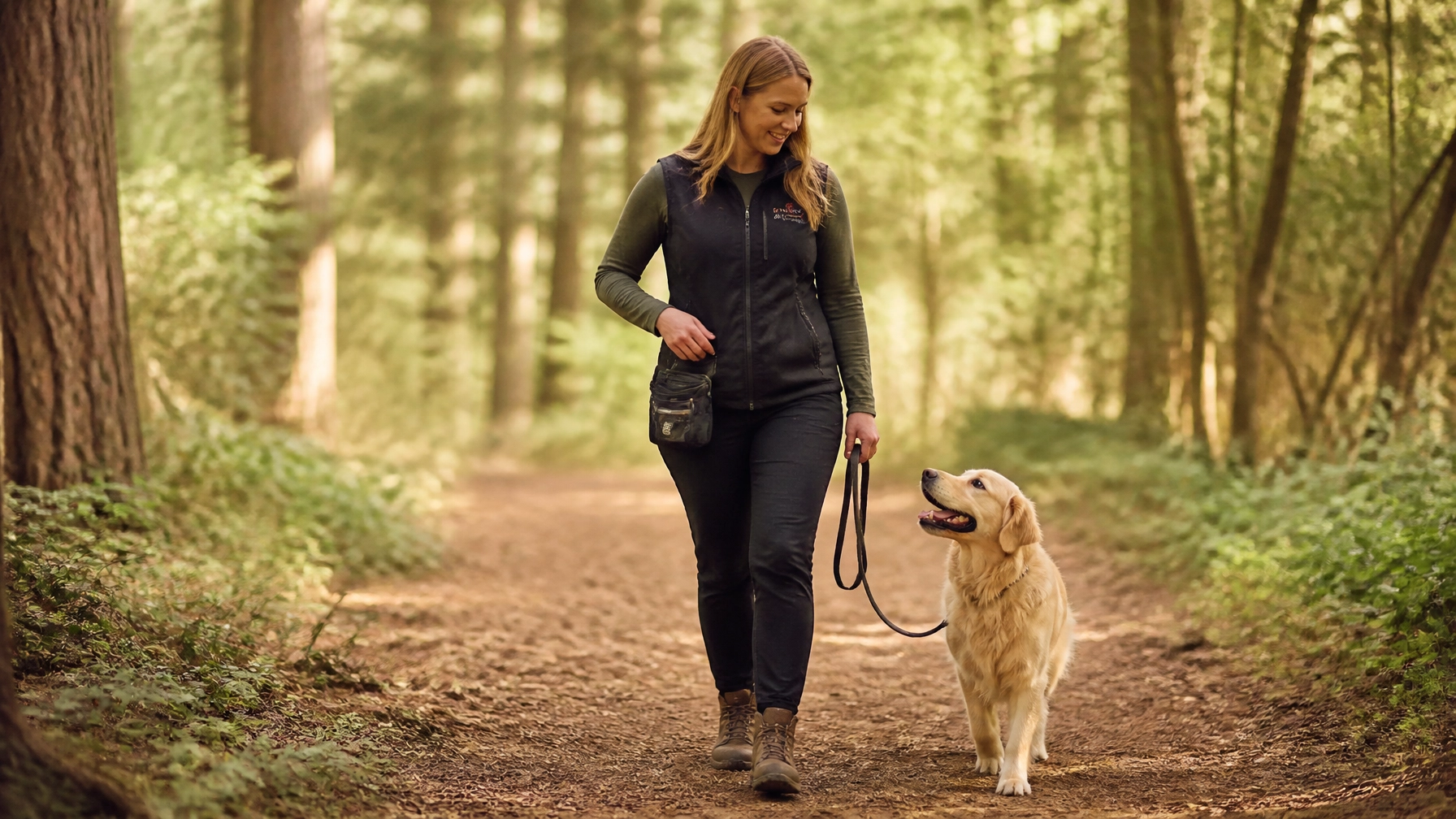
Walking your dog should be the highlight of your day, a peaceful moment to connect and enjoy the fresh air. However, for many owners in Rugeley, it often feels more like a cross-country tug-of-war. If you find yourself being dragged toward every squirrel in Cannock Chase or towed down the High Street, you’re certainly not alone. Pulling on the lead is one of the most common challenges we address at The Pet Leisure Co.
Fortunately, teaching your dog to walk on a loose lead doesn't have to be a chore of constant corrections. By turning the learning process into a series of engaging games, we can shift your dog’s focus from the environment back to you. We believe in a balanced training approach: rewarding the choices we want while setting clear boundaries for the ones we don't.
Furthermore, training in local environments like Elmore Park or the Slitting Mill area provides real-world distractions that help solidify these skills. Below, we have compiled 20 effective games to help you reclaim your walks.
Training in the Heart of Rugeley
Before diving into the games, it is essential to consider where you practice. Rugeley offers fantastic locations for dog training, from the quiet corners of Elmore Park to the expansive trails of Cannock Chase Forest.
Moreover, with the upcoming Rugeley Riverside Park set to provide even more green space, there has never been a better time to refine your dog's lead manners. Practicing your dog training in Rugeley means your pet learns to remain calm near the historic Clock Tower or while passing other walkers near Horns Pool.
Engagement & Focus Games
The foundation of a good walk is engagement. If your dog isn't checking in with you, they are essentially walking themselves.
- Red Light, Green Light: This classic game teaches your dog that a loose lead is the "key" to movement. When the lead is slack, you go (green light). The moment it tightens, you stop (red light). Wait for your dog to create slack before moving again.
- The Check-In Game: Reward every single time your dog looks back at you voluntarily. Whether you’re walking past the shops or through the woods, a glance toward you earns a high-value treat.
- Find-It Scatter: If your dog starts to get "hyper-focused" on a distraction, say "Find it!" and scatter a few treats at your feet. This resets their brain and brings their nose to the ground near you.
- Toss & Go: Toss a low-value treat a few feet away. Once they eat it and turn back to you, mark the movement and reward them with a higher-value treat right at your side.
- Crazy Walking: Change direction frequently and unpredictably: left, right, and U-turns. This forces your dog to pay attention to your body language rather than just forging ahead.

Position & Spatial Awareness Games
These games help your dog understand exactly where they should be: usually by your hip.
- The Food Magnet: Hold a treat at your dog’s nose level by your leg. Let them follow your hand for a few steps before feeding. Gradually fade the food so they follow your empty hand.
- Pattern Game: 1-2-3: Count "1, 2, 3" as you walk. On "3," your dog gets a treat by your leg. They will soon start to anticipate the reward and pace themselves to match yours.
- Figure-8s: Walk in a figure-8 pattern around two trees or cones. This constant turning makes it difficult for the dog to pull in one direction and keeps them tucked into your side.
- Side-Switching: Teach your dog to move from your left side to your right side on cue. This mental challenge keeps them engaged and aware of your position.
- Backyard Obstacle Course: Set up some household items and practice weaving through them. It’s a fun way to practice dog training in a low-distraction environment before heading to the park.
Precision & Pacing Games
Walking isn't just about position; it's about matching your energy and speed.
- Stop-When-I-Stop: Periodically stop walking without a word. If your dog stops with you and keeps the lead slack, give them a jackpot reward.
- The Cup-of-Water Challenge: This one is for you! Carry a cup of water and try not to spill it. It forces you to move smoothly and stay consistent, which in turn helps your dog stay calm.
- Speed Variations: Practice walking in slow motion, then a fast brisk walk, then back to normal. Your dog must adjust their pace to stay with you.
- Treasure Hunt: Pre-hide some treats along your walking route (like a quiet path in Slitting Mill). Only allow your dog to "find" the treasure when the lead is perfectly loose.
- Long-Line Check-Ins: On a long training lead, give your dog 15 feet of freedom. Mark and reward every time they choose to come back into the "heel" position without being called.

Distraction Management Games
These are vital for those high-distraction areas like Market Square.
- Distraction Disengagement: Place a "distraction" (like a toy) at a distance. When your dog looks at it and then looks back at you, reward them heavily. We call this "turning away from temptation."
- Sniff-Break Rewards: Use "Go Sniff!" as a reward. Walk nicely for 20 paces, then cue your dog to sniff a patch of grass. This teaches them that walking nicely is the way to get what they want.
- Two-Leash Toggling: For very strong pullers, using a harness with two contact points allows you to gently steer them back into position without a struggle.
- Be-A-Tree (With a Twist): When your dog pulls, don't just stop: take three steps backward. This ensures that pulling makes them lose ground, which is the opposite of what they want.
- Leash Pressure Release: In your garden, apply very light pressure to the lead. The second your dog steps toward you to release that pressure, reward them. This teaches them the "language" of the lead.
The Importance of a Balanced Approach
At The Pet Leisure Co, we advocate for a balanced perspective. While games and rewards are incredible for building a bond and teaching new skills, we also understand that dogs need clear communication.
Therefore, we combine high-value rewards for good choices with fair, consistent boundaries. If your dog is struggling with puppy training or long-term habits, our 1-1 mobile sessions allow us to address these behaviours in the exact locations where they occur. Whether it's the excitement of seeing another dog near Rising Brook or the urge to chase squirrels in the woods, we provide the tools you need to succeed.
Why These Games Work
- Mental Stimulation: These games turn a boring walk into a problem-solving session for your dog.
- Safety: A dog that walks on a loose lead is safer for the owner and the public, especially in busy town areas.
- Bonding: You become the most interesting thing in the environment, strengthening your relationship.
- Communication: You are teaching your dog a clear way to "win" the walk.
Additionally, consistent practice in different Rugeley landmarks helps your dog generalise their training, ensuring they behave just as well in the town centre as they do in your back garden.

Summary & Takeaway
Stopping lead pulling isn't about strength; it's about strategy. By implementing these 20 games, you can transform your daily walks from a chore into a joy. Remember to start in low-distraction areas before testing your dog's skills in busier parts of Rugeley.
Consistency is key. Use high-value rewards, be clear with your "red lights" and "green lights," and don't be afraid to ask for professional help if you're feeling stuck.
Contact Us
If you are struggling with your dog’s lead walking or general behaviour, The Pet Leisure Co is here to help. We offer professional dog training in Rugeley, providing both 1-1 mobile training and group classes tailored to your needs.
- Visit our website: petleisure.co.uk
- Book a consultation: Contact Us Here
- Explore our services: View Training Packages
Let’s work together to make your walks the best they can be.
