
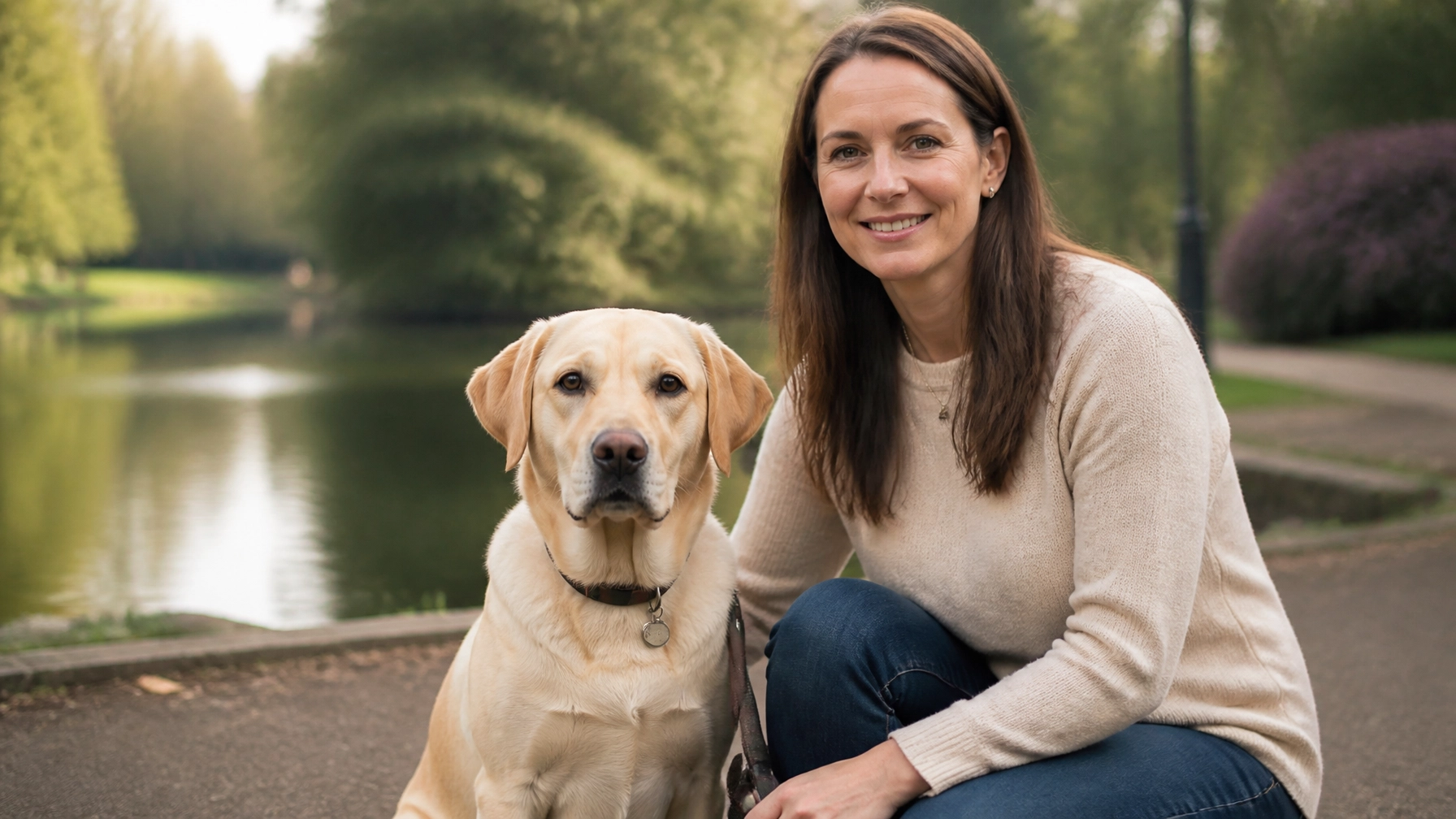
Owning a dog in the heart of the West Midlands brings a unique set of joys and challenges. From the bustling streets of Walsall Town Centre to the sprawling greenery of the Walsall Arboretum, our dogs are constantly bombarded with stimuli. Many owners find themselves struggling with common issues like lead pulling, reactivity, or a lack of recall, often wondering why the "standard" advice doesn't seem to work.
There is often a significant gap between what is shared in generic online tutorials and what a professional dog behaviourist in Walsall actually does behind closed doors. The reality of canine rehabilitation is rarely about a single "magic" trick. Instead, it is built upon a foundation of understanding canine psychology, implementing structure, and maintaining a balanced perspective on training.
In this article, we will peel back the curtain on the industry. We will explore the methodologies that lead to lasting behavioural change and reveal how you can transform your relationship with your dog by adopting the same principles used by the experts.
The Balanced Approach: Moving Beyond Labels
One of the most significant secrets in the industry is that "labels" often hinder progress more than they help. You may have heard terms like "positive-only" or "force-free," but many experts understand that dogs, much like humans, require a balanced approach to learning. This does not mean using harsh or outdated methods; rather, it means providing both clear rewards for good behaviour and consistent boundaries for unwanted actions.
When we talk about a balanced training perspective, we are referring to a system that prioritises the dog's emotional well-being while ensuring they understand the "rules of the house." Dog training in Walsall should be about communication, not just command. If a dog is never told what not to do, they can become confused and anxious, leading to the very behaviours owners are trying to fix.
Furthermore, a balanced approach allows us to tailor our methods to the individual dog. A timid rescue dog in Pelsall will require a different strategy than a high-drive working breed in Aldridge. By understanding the nuances of reinforcement and correction, we can create a clear, two-way dialogue between you and your pet.

The Secret of Management: The "Un-Training" Phase
Perhaps the best-kept secret of any professional dog behaviourist in Walsall is that the most effective training often happens when you aren't training. This is known as management. Many owners believe that every walk or every interaction must be a rigorous training session. However, constantly putting a dog in a position where they fail actually reinforces the bad habit.
Therefore, we often advise owners to "manage" the environment first. If your dog barks at the window, we don't just "train" the bark; we might suggest using a window film or a baby gate to prevent the visual trigger in the first place. This stops the dog from "practicing" the unwanted behaviour while we work on the underlying issue in a controlled setting.
Moreover, management is essential during puppy classes in Walsall. Before a puppy can learn to focus in a busy park, they must first learn to focus in the quiet of your living room. By controlling the environment, you ensure your dog is set up for success every single time.
Why Your "Sit" Works at Home but Not at the Arboretum
A common frustration for owners is a dog that is "perfect at home" but "deaf in public." The secret here is "proofing." Most owners stop training once the dog understands the command in the kitchen. However, a professional trainer knows that a command is only truly learned when it can be performed under various levels of distraction.
If you are practising your recall at Barr Beacon, the distractions are significantly higher than in a fenced garden. You are competing with scents, other dogs, and wide-open spaces. To overcome this, we use a gradual increase in difficulty, often referred to as the Small Incremental Learning System (SILS).
- Step 1: Perfect the behaviour in a low-distraction environment (indoors).
- Step 2: Move to the garden or a quiet street.
- Step 3: Introduce mild distractions, like a family member walking nearby.
- Step 4: Visit a local park during a quiet time.
- Step 5: Generalise the behaviour in busy areas like Walsall Town Centre.
By following these steps, you build a "reliable" dog. If you skip steps, you are essentially asking a primary school student to sit a university exam; they will inevitably fail.

The "De-Hyping" Secret: Calmness is a Taught Skill
Many owners inadvertently train their dogs to be hyperactive. Think about the moment you pick up the lead. If your dog starts spinning and barking, and you immediately clip the lead and head out, you have just rewarded that high-arousal state. You are starting your walk with a dog that is already "over the threshold."
A professional dog behaviourist in Walsall will tell you that the walk starts the moment you think about going out. We recommend making the "triggers" boring. Pick up the lead and sit on the sofa. Put on your walking boots and then go and make a cup of tea. By decoupling these actions from the immediate excitement of the walk, you teach your dog that calmness is the only way to get what they want.
Additionally, we suggest incorporating "brain games" before leaving the house. A quick five-minute sniffing session or a puzzle toy can lower a dog's heart rate and make them much more receptive to your instructions once you hit the pavement in Rushall or Shelfield.
Professional Dog Training Walsall: The Power of 1-1 Sessions
While group classes are excellent for socialisation, many owners find that 1-1 dog training in Walsall is the "secret weapon" for tackling specific behavioural issues. In a group setting, a trainer must divide their attention among several dogs. In a private session, the entire focus is on you and your dog's unique environment.
At The Pet Leisure Co, our 1-1 mobile training allows us to see the dog in their natural habitat. We can identify triggers in your home or on your local walking route that a classroom trainer would never see. For instance, a dog might be reactive only to a specific neighbour's fence in Bloxwich. A 1-1 session allows us to address that exact scenario in real-time.
Furthermore, private sessions provide the owner with the confidence to handle their dog without the pressure of being watched by a group. This psychological shift in the owner is often the catalyst for the dog's improvement. For more information on choosing the right path, you can read our guide on 1-1 dog training vs group classes.

Puppy Classes Walsall: Socialisation vs Exposure
One of the biggest misconceptions in the dog world is what "socialisation" actually means. Many owners believe it means their puppy must meet every dog and person they see. In reality, experts know that "forced" socialisation can lead to reactivity and fear.
True socialisation is about neutrality. We want our puppies to see a cyclist in Walsall Arboretum and decide that the cyclist is unimportant. We want them to hear the sirens in the town centre and remain calm. Our puppy classes in Walsall focus on controlled exposure, ensuring that every new experience is positive and manageable.
Therefore, we focus on:
- Watching the world go by from a distance.
- Learning to focus on the owner despite distractions.
- Understanding that not every dog is a playmate.
- Building confidence through obstacles and new textures.
If you are just starting your journey, our ultimate guide to puppy training (applicable across the West Midlands) offers deeper insights into these early stages.
Consistency: The Non-Negotiable Factor
The final "secret" isn't a technique at all; it is consistency. Dogs thrive on predictability. If you allow your dog on the sofa on Monday but scold them for it on Tuesday because you have guests, the dog learns that your rules are arbitrary. This creates a "gambler's mentality" where the dog keeps trying the bad behaviour to see if they can get away with it this time.
Moreover, consistency must extend to everyone in the household. If one person uses the command "come" and another uses "here," the dog’s response will be delayed. Establishing a clear set of house rules and a unified vocabulary is the fastest way to see results.

Summary and Takeaways
Becoming an "expert" in your dog's behaviour doesn't require a degree, but it does require a shift in perspective. By moving away from quick fixes and embracing a balanced, consistent, and structured approach, you can achieve the "reliable" dog you've always wanted.
- Embrace Balance: Combine rewards for good behaviour with clear boundaries for the bad.
- Prioritise Management: Prevent the "practice" of unwanted habits before you try to fix them.
- Focus on Neutrality: Socialisation is about being calm in the environment, not meeting everyone.
- De-Hype the Triggers: Teach your dog that calmness is the key to rewards.
- Proof Your Training: Gradually increase distractions to ensure your dog listens everywhere, from Walsall Arboretum to your own back garden.
Contact Us
If you are looking for a dog behaviourist in Walsall or would like to join our puppy classes, we are here to help. We pride ourselves on providing professional, supportive, and effective training solutions tailored to your needs.
- Email us: [email protected]
- Visit our website: petleisure.co.uk
- Call us: To discuss our 1-1 mobile training or group class availability in Walsall, Cannock, and surrounding areas.
