
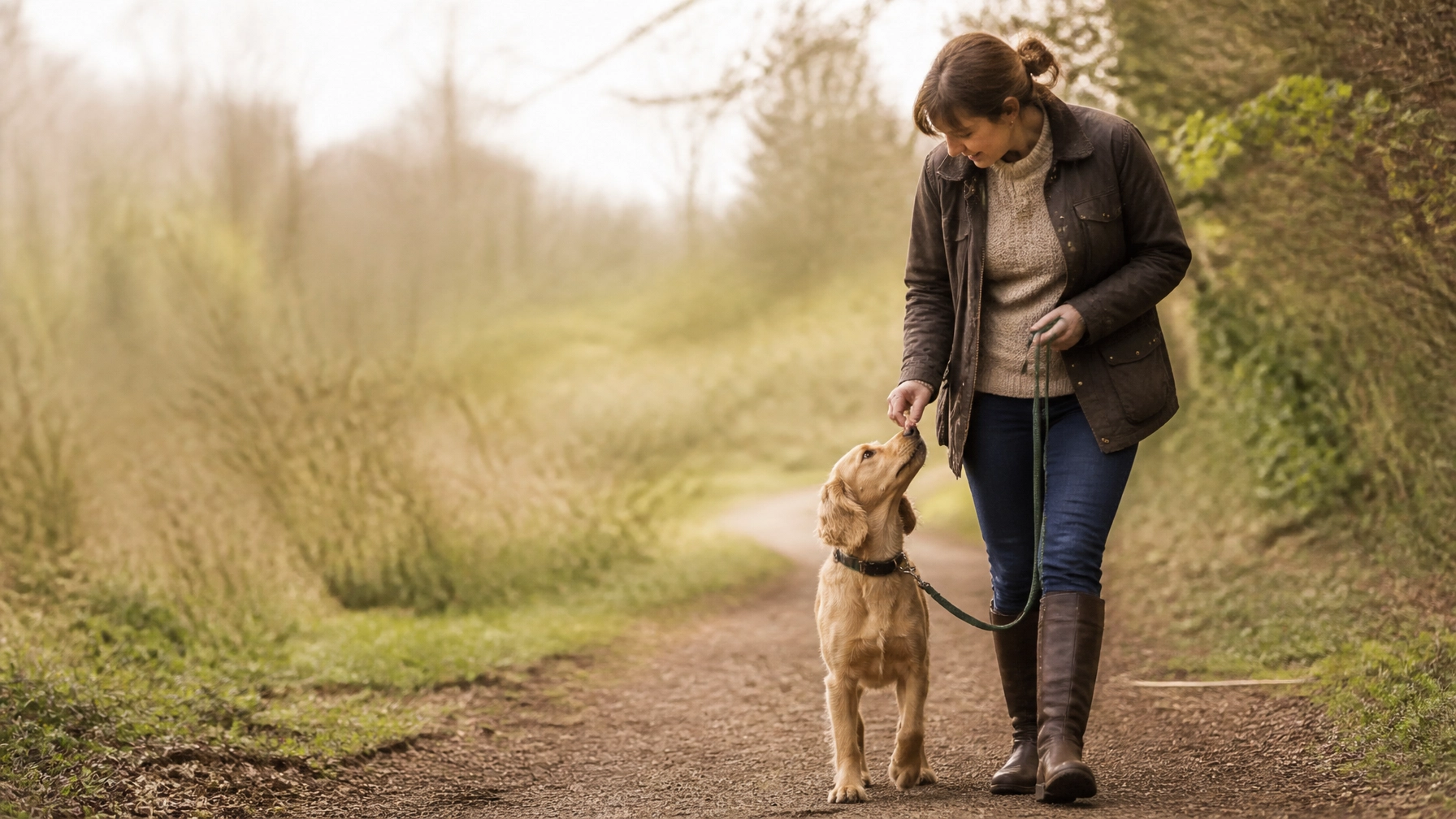
If your dog spends every walk pulling towards scents, people, birds or other dogs, you’re not alone. Lead pulling is one of the most common problems faced by pet owners, and it can make even a short walk feel tiring and stressful.
The good news is that you can teach your dog a calmer, more comfortable way to walk. With consistent handling, clear boundaries and suitable rewards, dog training Lichfield owners can use at home and outdoors can make a noticeable difference.
At The Pet Leisure Co, we take a balanced approach to training. We reward the behaviour we want to see, while also setting fair and consistent boundaries. Therefore, the aim isn’t simply to make your dog walk beside you at all times. It’s to build communication, improve safety and help you both enjoy walks together.
Dog Training Lichfield: Why Does Your Dog Pull on the Lead?
Dogs pull because it works. When your dog moves forward on a tight lead and reaches a tree, another dog or an interesting smell, the pulling has been rewarded by access to something they want.
Moreover, dogs naturally move faster than people and experience the outside world through their noses. A busy pavement, a new park or the anticipation of a walk can all make pulling more likely.
Common reasons for lead pulling include:
- Excitement when leaving the house
- A strong desire to sniff and explore
- Frustration when approaching people or dogs
- Fear or anxiety in busy surroundings
- Inconsistent rules between family members
- A lead, collar or harness that isn’t comfortable
- A lack of practice in distracting environments
It’s also important to consider your dog’s health. If pulling has started suddenly, or your dog seems uncomfortable when walking, speak to your vet before beginning a new training plan.
Stop Dog Pulling on Lead: Start with the Right Equipment
Equipment won’t train your dog by itself, but the right setup can make training safer and easier. Choose a comfortable, well-fitted harness or flat collar and a standard lead that gives you enough control without encouraging your dog to walk far ahead.
Avoid relying on equipment designed to cause pain or fear. Choke chains, prong collars and harsh lead corrections can damage trust and may increase anxiety or reactivity. Guidance from organisations such as the RSPCA, Blue Cross and PDSA supports kind, reward-based methods for teaching loose-lead walking.
A small treat pouch can also help. Use soft treats that your dog values, cut into small pieces so you can reward regularly without overfeeding.

Dog Training Lichfield: Teach Your Dog What a Loose Lead Means
Before expecting your dog to walk politely beside you in a busy park, begin somewhere quiet. Your home, garden or a calm residential area will give your dog a better chance to understand the exercise.
Start by standing still with your dog on the lead. The moment your dog looks towards you, moves closer or creates slack in the lead, calmly say “yes” or “good” and offer a treat beside your leg.
Repeat this several times. You’re teaching your dog that paying attention to you and keeping the lead loose brings a reward.
Next, take one or two steps forward. If the lead remains loose, reward your dog. Gradually increase the number of steps between rewards as your dog begins to understand the pattern.
Keep early sessions short. Three to five minutes of focused training can be more useful than a long walk where your dog repeatedly practises pulling.
Stop Dog Pulling on Lead: Use the Stop-and-Wait Method
The most important rule is simple: pulling must not move your dog towards what they want.
When the lead becomes tight:
- Stop walking immediately.
- Keep your hands still and avoid pulling back.
- Wait for your dog to turn towards you, step back or loosen the lead.
- Mark the moment the lead becomes slack.
- Reward your dog, then continue walking.
This creates a clear consequence without frightening or hurting your dog. A tight lead stops progress, while a loose lead allows the walk to continue.
Initially, you may find that you don’t get very far. That’s normal. Your dog is learning that the old strategy no longer works. Be patient and reward generously when they make the right choice.
If your dog repeatedly surges ahead, you can also use a calm directional change. Turn away without jerking the lead and walk in the opposite direction. When your dog catches up and the lead becomes loose, reward them and continue.
This technique is sometimes called a directional reset. It helps your dog notice your movement rather than becoming fixed on whatever is ahead.

Dog Training Lichfield: Use Sniffing as a Reward
Food isn’t the only reward available on a walk. For many dogs, being allowed to sniff is more valuable than a treat.
You can use the environment to reinforce good lead manners. For example, walk towards a grassy area while rewarding your dog for keeping the lead loose. Once you reach the spot, release your dog with a cue such as “go sniff”.
If your dog pulls towards the grass, stop and wait. When they return their attention to you and the lead slackens, allow them to continue.
This teaches an important lesson: calm walking gives your dog access to the things they enjoy. It also makes training feel less restrictive, because your dog still has opportunities to explore.
Furthermore, allowing appropriate sniffing can help meet your dog’s natural needs. A walk doesn’t have to be a constant heel exercise. Aim for a practical balance between polite walking, safe exploration and relaxed time together.
Stop Dog Pulling on Lead: Build Up Distractions Gradually
Many owners make the mistake of moving straight from the garden to a crowded park. If your dog can walk calmly at home but pulls near dogs, children or traffic, they haven’t failed. The environment is simply more difficult.
Progress gradually through different levels of distraction:
- Quiet rooms inside your home
- Your garden or driveway
- A calm residential street
- A quiet section of Beacon Park
- Busier paths and open spaces
- Areas with other dogs at a safe distance
Reward your dog for checking in with you before they pull. If they become overexcited, increase the distance from the distraction and make the exercise easier.
You can practise in Beacon Park, around Stowe Pool or along the Darwin Walk, depending on your dog’s confidence and the level of activity. Always consider other park users, keep your dog at a safe distance from triggers and follow local access requirements.
Training in different locations helps your dog understand that loose-lead walking applies everywhere, not just in the garden.
Dog Training Lichfield: Avoid These Common Mistakes
Loose-lead training takes time, particularly if pulling has been practised for months or years. Avoiding common errors will help you make steadier progress.
- Allowing occasional pulling: If pulling sometimes gets your dog where they want to go, the behaviour can become persistent.
- Repeating the same cue: Saying “heel” or “close” repeatedly without changing what happens can make the cue meaningless.
- Training for too long: End the session before either of you becomes frustrated.
- Using only one type of reward: Combine food, praise, movement and access to sniffing.
- Expecting perfection: A dog may walk well in one area and struggle in another.
- Ignoring your own handling: Keep the lead as relaxed as possible and avoid sudden movements.
- Moving too close to triggers: Give your dog enough space to think and respond.
Our article on the simple trick to stop dog pulling on lead during a Lichfield walk explains the directional reset in more detail.
Stop Dog Pulling on Lead with 1-1 Training in Lichfield
Some dogs need more individual support, particularly when pulling is combined with barking, lunging, fear or frustration. If you’re physically struggling to hold your dog, avoid busy areas while you build confidence and seek professional guidance.
1-1 mobile dog training in Lichfield allows us to work in the places where problems actually occur. That may be outside your home, on your usual route or in a local park. We can adjust the distance from distractions, coach your handling and create a plan that suits your dog’s temperament.
Group classes can also be useful for confident dogs that need to practise around controlled distractions. Read our guide to 1-1 dog training versus group classes if you’re unsure which option is the best starting point.

A Balanced Approach to Dog Training Lichfield
A balanced training plan should be fair, practical and consistent. We use rewards to show your dog which choices work, while clear boundaries prevent unwanted behaviour from becoming a successful habit.
That doesn’t mean every walk must be strict. Your dog should have time to sniff, explore and enjoy being outside. However, when safety matters or the lead becomes tight, your dog needs to understand what is expected.
The best results come when everyone in your household follows the same rules. Decide where your dog can walk, which cue you’ll use and how you’ll respond to pulling. Consistency gives your dog reliable information and reduces confusion.
Summary: How to Stop Dog Pulling on Lead
To improve your dog’s walking, begin in a quiet area and reward every small success. Stop when the lead tightens, wait for slack and then continue. Gradually introduce distractions around Lichfield, using sniffing and exploration as valuable rewards.
With patience, repetition and the right support, your walks can become calmer and safer. Dog training Lichfield owners can rely on should help you build practical skills that work in everyday life, not just during a lesson.
Contact Us
If you’d like help to stop dog pulling on lead, our team can support you with practical 1-1 mobile dog training and group training classes.
- Visit our website: petleisure.co.uk
- Enquire about training: Contact The Pet Leisure Co
- Explore our services: Dog training packages
- Call us: +44 1543 523 850
- Email us: [email protected]
We’re happy to discuss your dog’s needs and help you choose the most suitable training option.
